Why Are Your Windows Letting the Heat In?
Have you ever sat inside your home on a hot summer day and still felt like you were outside? Your walls might be thick, your AC might be running non-stop — but your windows could be the real problem.
Most people never think about their windows when it comes to summer heat. But here is the truth: ordinary windows are one of the biggest reasons your home gets so hot in summer. Up to 30% of unwanted heat enters your home through windows. That means your energy bills go up and your comfort goes down.
This is exactly why heat-proof uPVC windows are becoming so popular — especially in hot countries like Pakistan, India, and the Middle East. In this article, we will explain what heat-proof windows are, how they work, and why uPVC is one of the best windows to reduce heat in summer.
What Are Heat-Proof Windows?
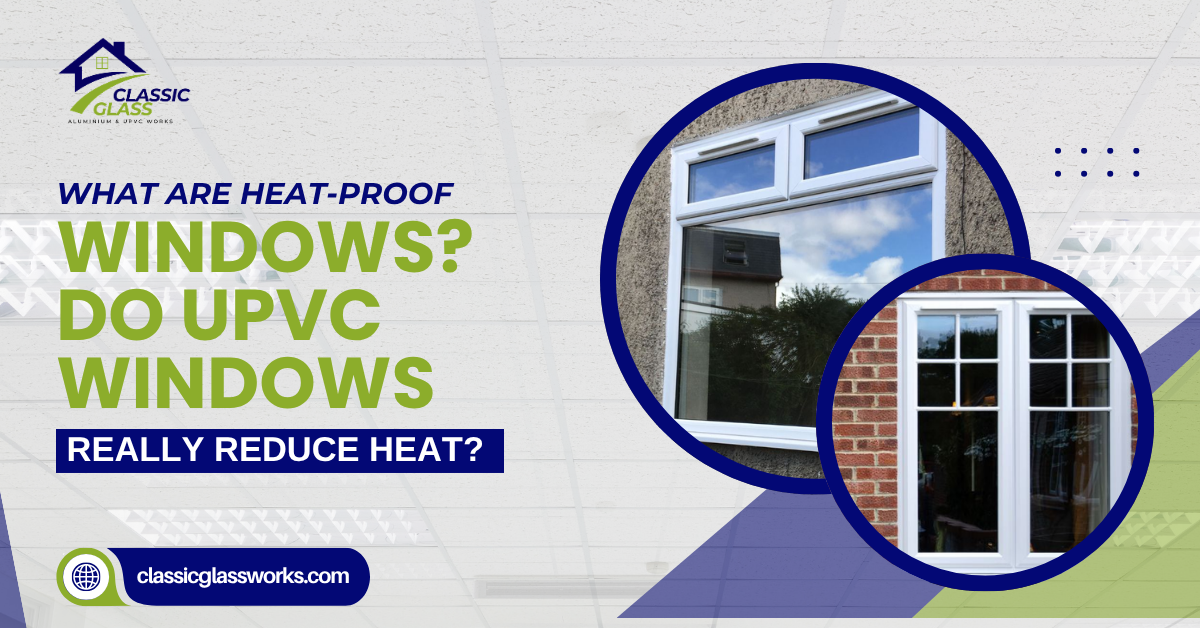
Heat-proof windows are specially designed windows that block or reduce the amount of heat entering your home from outside. They do this through a combination of smart materials and technology:
- Multi-chambered uPVC frames that do not conduct heat easily
- Double-glazed or triple-glazed glass with gas-filled between the panes
- Low-E Glass coating that reflects infrared heat
- Airtight sealing that stops hot air from leaking inside
Together, these features work as a barrier between the scorching heat outside and the cool air inside your home.
What Is uPVC and Why Does It Matter?
uPVC stands for Unplasticized Polyvinyl Chloride. It is a strong, rigid plastic material that is used to make window and door frames. Unlike regular aluminum or wooden frames, uPVC has some very special qualities:
- It does not conduct heat as easily as metal
- It does not rot like wood
- It does not rust or corrode
- It is low maintenance and easy to clean
- It lasts for 30 to 40 years with proper care
Because uPVC does not transfer heat easily, it naturally keeps your room cooler in summer and warmer in winter. This is called thermal insulation — and it is one of the biggest reasons people are switching to uPVC windows across the world.
How Do Heat-Proof uPVC Windows Really Work?
Let’s break this down in simple steps so anyone can understand.
Multi-Chambered Profiles — The First Defense
Inside a uPVC window frame, there are small air pockets called chambers. These chambers trap air inside the frame. Since air is a poor conductor of heat, this trapped air acts like a wall — stopping heat from passing through the frame into your room.
High-quality uPVC windows have 5 to 7 chambers, which gives even better insulation. This is one major advantage over aluminum frames, which have no such chambers and actually speed up heat transfer.
Double-Glazed Glass — Two Layers Are Better Than One
Standard windows have just one layer of glass. Double-glazed glass has two layers with a gap between them — usually filled with argon gas or dry air. This gap is where the magic happens.
Heat from the sun tries to pass through the glass. But the gas-filled gap acts as an insulator and slows down heat transfer dramatically. Some high-end windows use triple glazing — three layers of glass — for even better performance.
This means:
- Less heat enters in summer
- Less heat escapes in winter
- Less noise from outside
Low-E Glass — Blocking Invisible Heat
You may have heard the term Low-E Glass. The “E” stands for emissivity, which simply means how much heat a surface radiates.
Low-E glass has a very thin, invisible metallic coating on its surface. This coating works like a mirror for infrared heat (the type of heat from the sun). It reflects heat away before it can enter your home.
- In summer, it reflects the sun’s heat outward
- In winter, it keeps the heat inside your room
Airtight Sealing — No More Hot Air Leaks
Even the best glass and frame will not work properly if hot air can leak through gaps. That is why airtight sealing is such an important part of heat-proof uPVC windows.
uPVC windows come with high-quality rubber gaskets and compression seals that close tightly when the window shuts. This means:
- No hot air sneaks in through the edges
- No cool (air-conditioned) air escapes outside
- Your AC or fan works more efficiently
This also keeps dust, pollution, and insects out of your home, which is a big bonus for people living in cities.
Benefits of Installing Heat-Proof uPVC Windows
Let us look at all the practical advantages you get when you choose heat-proof uPVC windows:
Lower Electricity Bills Because less heat enters your home, your air conditioner does not have to work as hard. This directly reduces your monthly electricity costs, which is a huge benefit in countries with hot summers and high energy prices.
More Comfortable Indoors A room with good heat-proof windows simply feels better. You will notice that the temperature is more stable — not too hot near the window, not too cold near the AC.
Better Sound Insulation: Double-glazed and triple-glazed windows are also excellent at blocking outside noise. If you live near a busy road or market, this is a major quality-of-life improvement.
Increased Property Value Homes with energy-efficient windows have higher resale value. Buyers and renters are increasingly looking for energy-efficient features when choosing a property.
Environmental Benefits: When you use less electricity, you are also reducing carbon emissions. Choosing energy-efficient windows is a small but meaningful step toward a more sustainable lifestyle.
Heat Transfer: Understanding the Science Simply
When we talk about heat transfer in windows, there are three ways heat moves:
- Conduction — Heat passes directly through a solid material (like a metal frame)
- Convection — Heat moves through air or gas
- Radiation — Heat travels as invisible infrared rays (like sunlight)
Regular single-pane windows allow all three types of heat transfer to happen easily. Heat-proof uPVC windows with double-glazed glass and Low-E coatings significantly reduce all three types. That is what makes them so effective at keeping your home cool.
Who Should Install Heat-Proof uPVC Windows?
These windows are ideal for:
- Homeowners who want to reduce their electricity bills
- Apartment residents in multi-story buildings
- Business owners who want comfortable offices without high AC costs
- Anyone living in hot climates — especially in South Asia, the Middle East, or Southern Europe
People renovating their homes who want long-term value
Tips for Choosing the Right Heat-Proof Windows
Not all uPVC windows are the same. Here are some things to look for:
- Check the number of chambers in the frame — more chambers mean better insulation
- Ask for double-glazed or Low-E glass options
- Look at the U-value — a lower U-value means better insulation
- Check the seal quality — the rubber gaskets should be thick and tight
- Choose a reputable manufacturer with proper certifications
Get professional installation — even the best window won’t perform well if installed poorly
Q. Do energy-efficient windows prevent heat from entering?
Yes, they do. Energy-efficient windows use multi-chambered uPVC profiles, double-glazed glass, Low-E coatings, and airtight seals to minimize heat transmission. All of these features work together to slow down or block heat transfer, which helps keep indoor spaces significantly cooler during summer months.
Q. Are uPVC windows energy efficient?
Absolutely. uPVC windows offer superior thermal insulation compared to aluminum or wooden windows. The multi-chamber design inside the uPVC frame traps air, which acts as a natural insulator. This reduces thermal conduction and helps maintain a comfortable indoor temperature in all seasons.
Q. How does an energy-efficient window work?
An energy-efficient window reduces heat gain in summer and heat loss in winter. It does this by combining double-glazed or triple-glazed glass, Low-E coatings, gas-filled gaps between panes, and airtight rubber seals. The result is lower cooling and heating costs, reduced energy use, and improved indoor comfort year-round.
Q. What is the difference between single-glazed and double-glazed glass?
Single-glazed glass is just one sheet of glass. Double-glazed glass has two sheets with a gas-filled space in between. This gap dramatically slows down heat transfer, making double-glazed windows much more effective at keeping heat out in summer and warmth in during winter.
Q. Are heat-proof uPVC windows worth the cost?
Yes — in the long run, they are very cost-effective. The savings on electricity bills over several years often exceed the initial installation cost. Plus, you get the added benefits of noise reduction, better comfort, and increased property value.
Conclusion: Make the Smart Choice for a Cooler Home
Summer heat is getting more intense every year. Old windows made of aluminum or single-pane glass simply cannot keep up with modern demands for comfort and energy efficiency.
Heat-proof uPVC windows with double-glazed glass, Low-E coatings, thermal insulation, and airtight sealing are the smartest upgrade you can make for your home. They reduce heat, cut electricity bills, last for decades, and make your living space genuinely more comfortable.
If you are thinking about replacing your windows, now is the time. Invest in quality heat-proof uPVC windows — and feel the difference from day one.
For more information on energy-saving home improvements, you can visit Energy Star’s window guide or read about sustainable building materials at GreenSpec.